


Mark Bittman’s 101 Simple Summer Salads
Mark Bittman is one of my favorite food writers because every recipe he publishes is so simple; easy to do, and yet inviting with a new look on the usual ingredients. He has published a list of 101 Simple Salads for the Season on his NYTimes blog Bitten.

Here are some samples (left to right in the above photo):
56. Salade niçoise, sort of: On or around a bed of greens, make mounds of olives, cooked new potatoes and green beans (warm or at room temperature), good tomatoes, capers, fennel slivers, hard-cooked eggs and good quality Italian canned tuna. None of these is crucial; you get the idea. Serve with vinaigrette or aioli.
7. Grate carrots, toast some sunflower seeds, and toss with blueberries, olive oil, lemon juice and plenty of black pepper. Sweet, sour, crunchy, soft.
42. Trim crusts if necessary from day-or-two-old bread (or even three-day-old bread), cube and marinate in black olive tapenade thinned with more olive oil. Add chopped capers and toss with tomatoes, basil and mozzarella. (Anchovies optional.)
49. Toss greens with walnuts, blue cheese and raspberries; drizzle with a simple vinaigrette. Sell for $14 a serving.
95. Mix cooked couscous or quinoa with orange zest and juice, olive oil, maybe honey, sliced oranges, raisins or dried cranberries, chopped red onion and chopped almonds. Serve over greens, or not.
13. A red salad: Combine tomato wedges with halved strawberries, basil leaves, shaved Parmesan and balsamic vinegar.
It is tempting to treat these salads as a daily treat and make them all, one by one.
If cooking is not really your thing, and the economic downturn has you thinking that maybe it should be your thing, and you only want a cookbook or two, you cannot go wrong with his two popular cookbooks: How to Cook Everything and How to Cook Everything Vegetarian.
How to saber a bottle of champagne
Living in Nantucket, this should be an indispensable skill. Your dinner guests deserve such a show. Click here for a step-by-step guide.
The Best Pizza Dough
My pizza story started as a college summer job making pizzas for Pizza Hut. Which made me rarely want a pizza again. Then I moved to Nantucket and had dinner one night at Grant Sanders’ house in the fashionable mid-Island district. Using Something Natural dough balls, he made an assortment of pizzas, which were as good as you’ll get in most restaurants. I was hooked. Dough-hooked. We began buying the Something Natural dough at Stop & Shop and enjoyed experimenting with new toppings. As is often the case with the Nantucket Stop & Shop, if it’s good, and cheap, it doesn’t last. Lately they stopped selling Something Natural dough and, instead, sell a Stop & Shop brand dough ball that tosses like it was made in a factory in Malaysia 3 years earlier.
So now we make the dough ourselves. (Keep meaning to see if you can get the dough ball directly from Something Natural, but who wants to drive downtown this time of the year?)
Researching the idea, I found the same pizza dough recipe posted on a number of food blogs. It comes from Peter Reinhart’s The Bread Baker’s Apprentice: Mastering the Art of Extraordinary Bread

Peter Reinhart’s Napoletana Pizza Dough Recipe
4 1/2 cups unbleached high-gluten, bread, or all-purpose flour, chilled
1 3/4 teaspoons salt
1 teaspoon instant yeast
1/4 cup olive oil
1 3/4 cups water, ice cold (40°F)
Semolina flour or cornmeal for dusting

1. Stir together the flour, salt, and instant yeast in the bowl of an electric mixer at low speed using the paddle attachment. Switch to the dough hook and mix on medium speed for 5 to 7 minutes, or as long as it takes to create a smooth, sticky dough. The dough should clear the sides of the bowl but stick to the bottom of the bowl. If the dough is too wet and doesn’t come off the sides of the bowl, sprinkle in some more flour just until it clears the sides. If it clears the bottom of the bowl, dribble in a teaspoon or two of cold water. The finished dough will be springy, elastic, and sticky, not just tacky, and register 50 to 55 deg.

2. Sprinkle flour on the counter and transfer the dough to the counter. Prepare a sheet pan by lining it with baking parchment and misting the parchment with spray oil. (Don’t use wax paper, it leaves the dough soggy.) Cut the dough into 6 equal pieces (or larger if you want large pizzas). Sprinkle flour over the dough. Make sure your hands are dry and then flour them. Lift each piece and gently round it into a ball. If the dough sticks to your hands, dip your hands into the flour again. Transfer the dough balls to the sheet pan. Mist the dough generously with spray oil and then cover in plastic wrap.

3. Put the pan into the refrigerator overnight to rest the dough, or keep for up to 3 days. I usually put two dough balls in the refrigerator and save the rest of the dough for future baking, storing the balls in a zippered freezer bag after dipping each dough ball into a bowl that has a few tablespoons of oil in it, rolling the dough in the oil, and then putting them into their own, individual bag. You can freeze these for up to 3 months. Transfer them to the refrigerator the day before you plan to make pizza so they can thaw and rise.

4. On the day you plan to make the pizza, remove the desired number of dough balls from the refrigerator 2 hours before making the pizza and allow them to rest at room temperature for 2 hours on a flour-dusted counter that is then misted with spray oil. Place the dough balls on top of the floured counter and sprinkle them with flour; dust your hands with flour. Gently press the dough into flat disks about 1/2 inch thick and 5 inches in diameter. Sprinkle the dough with flour, mist it again with spray oil, and cover the dough loosely with plastic wrap or a food-grade plastic bag. Now let rest for 2 hours.

(This is where the images stop for today, because my fresh batch of dough has to rise. If time allows tomorrow night, I’ll update this post with pics of the final product.)
5. At least 45 minutes before making the pizza, place a baking stone on a rack in the lower third of the oven. Heat the oven as hot as possible, up to 800F (most home ovens will go only to 500 to 550F, but some will go higher). If you do not have a baking stone, you can use an upside down large cast iron skillet.
6. Generously dust a peel or the back of a sheet pan with semolina flour or cornmeal. Make the pizzas one at a time. Dip your hands in flour, lift a piece of dough, and gently lay the dough across your fists and carefully stretch it by bouncing the dough in a circular motion on your hands, carefully giving it a little stretch with each bounce. If it begins to stick to your hands, lay it down on the floured counter and reflour your hands, then continue shaping it. Once the dough has expanded outward, move to a full toss. If you have trouble tossing the dough, or if the dough keeps springing back, let it rest for 5 to 20 minutes so the gluten can relax, and try again. You can also resort to using a rolling pin, though this isn’t as effective as the toss method.
7. When the dough is stretched out to your satisfaction (about 9 to 12 inches in diameter for a 6-ounce piece of dough), lay it on the peel or pan, making sure there is enough semolina flour or cornmeal to allow it to slide. Lightly top it with sauce and then with your other toppings, remembering that the best pizzas are topped with a less-is-more philosophy. The Pizza Hut “All Game At The Same Time Meat Lovers” approach is counterproductive, as it makes the crust more difficult to bake. A few, usually no more than 3 or 4 toppings, including sauce and cheese is sufficient.
8. Slide the topped pizza onto the stone (or bake directly on the sheet pan) and close the door. Wait 2 minutes, then take a peek. If it needs to be rotated 180 degrees for even baking, do so. The pizza should take about 5 to 8 minutes to bake. (If the top gets done before the bottom, you will need to move the stone to a lower self before the next round; if the bottom crisps before the cheese caramelizes, then you will need to raise the stone for subsequent bakes.)
9. Remove the pizza from the oven and transfer to a cutting board. Wait 3 to 5 minutes before slicing and serving, to allow the cheese to set slightly.
Makes six 6-ounce pizza crusts.
Why Some Foods Are Hard To Resist
David A. Kessler,MD is a Harvard-trained doctor, lawyer, medical school dean and former commissioner of the Food and Drug Administration and to research his latest book, The End of Overeating, he turned to dumpster-diving.
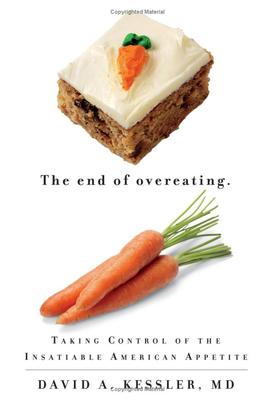
He was researching the ingredients of dishes served at a neighborhood Chili’s, information he couldn’t get from the restaurant, looking for food labels on discarded boxes. As FDA Commissioner he had something to say about the nutritional labels on foods sold in retail stores, but had never required the same of restaurants. So in he went.
The labels showed the foods were bathed in salt, fat and sugars, beyond what a diner might expect by reading the menu. For example, the ingredient list for Southwestern Eggrolls mentioned salt eight different times; sugars showed up five times. The “egg rolls,” which are deep-fried in fat, contain chicken that has been chopped up like meatloaf to give it a “melt in the mouth” quality that also makes it faster to eat. By the time you finish this appetizer, you would’ve consumed 910 calories, 57 grams of fat and 1,960 milligrams of sodium.
Kessler delves into the psychology and neuroscience of our food cravings, seeking an explanation to the conundrum of the person whose “will-power” is strong on many fronts, but who finds it hard to resist unhealthy foods (I class myself among those people). He concludes that we’re extremely susceptible to reward-conditioning when the reward consists of foods that combine fat, sugar and salt, and that the food industry has evolved to deliver extremely efficient, super-sized portions of fat-sugar-salt bombs in a variety of satisfying textures and presentations. Through interviews with scientists, psychologists and food industry insiders, and his own scientific studies and hours spent surreptitiously watching other diners at food courts and restaurants around the country, Kessler writes that he finally began to understand why he himself has spent his life having a hard time controlling his eating.
“Highly palatable” foods — those containing fat, sugar and salt — stimulate the brain to release dopamine, the neurotransmitter associated with the pleasure center. In time, the brain gets wired so that dopamine pathways light up at the mere suggestion of the food, such as driving past a fast-food restaurant, and the urge to eat the food grows insistent. Once the food is eaten, the brain releases opioids, which bring emotional relief. Together, dopamine and opioids create a pathway that can activate every time a person is reminded about the particular food. This happens regardless of whether the person is hungry.
Not everyone is vulnerable to “conditioned overeating” — Kessler estimates that about 15 percent of the population is not affected and says more research is needed to understand what makes them immune. But for those like me and Kessler, the key to stopping the cycle is to rewire the brain’s response to food — not easy in a culture where unhealthy food and snacks are cheap and plentiful, portions are huge and consumers are bombarded by advertising that links these foods to fun and good times, he said. Deprivation only heightens the way the brain values the food, which is why dieting doesn’t work, he said.
He concludes with a set of recommendations for breaking the conditioned responses we develop to crappy food. But this is where the book was a little disappointing. Having set up an exciting new framework for understanding our relationship to food, all Kessler offers by way of resisting junk food is a kind of Weight Watchers: be mindful about what you eat, avoid temptation, don’t give in a little lest you give in a lot, and so on. Nothing new here, and while it works, it’s hard, and harder still to sustain. Anyone who’s devoted more than a few hours to the question of controlling weight and eating has encountered and tried this advice — and chances are, they’ve failed at it.
Nonetheless, the book barrels along as a pop-sci book that clearly explains the science behind the “Insatiable American Appetite.”
4th of July Menu
Here’s my contribution for tonight’s cookout.

Pineapple-Braised Ribs with Honey-Garlic Tomato Glaze
Adapted from Killer Ribs by Nancy Davidson.
Ingredients
For the Glaze:
1/8 cup olive oil
1/8 cup chopped onion
1 teaspoon minced fresh garlic
2 cups ketchup
3/4 cup packed dark brown sugar
1/2 cup apple cider vinegar
1/2 cup apple juice
1/8 cup honey
3/4 tablespoon Worcestershire sauce
1/2 teaspoon salt
1/2 teaspoon black pepper
1/2 teaspoon cayenne pepper
1/2 teaspoon celery seed
2 racks of pork spare ribs
Your favorite dry rub
3 cups pineapple juice
Procedure
1. Remove the membrane and trim the ribs. Rub each rack liberally with your favorite dry rub. Place ribs in the refrigerator over night.
2. Lightly sauté the onions and garlic with the olive oil in a saucepan. Add the remaining glaze ingredients and heat until the sauce bubbles. Remove from the heat and let cool to room temperature.
3. Remove the ribs from the fridge while you preheat your smoker to 225 degrees. Place the ribs in the smoker, meat side up, and smoke for 3 hours at 225 degrees.
4. Remove the ribs and wrap each slab meat-side down in double aluminum foil. Pour 1 1/2 cups of pineapple juice over each rack and seal foil tightly. Place ribs back into the smoker and cook for an additional hour.
5. Remove ribs from the smoker and the foil. Lightly apply more dry rub, and then place back into smoker, meat side up, to cook for an additional hour or until done.
6. Brush glaze on top of the ribs and continue to cook until the sauce caramelizes. Remove from the smoker, slice, and serve.

Fresh Corn Salad
Adapted from The Barefoot Contessa Cookbook by Ina Garten.
Ingredients
4 ears of corn, shucked
1/2 cup small-diced red onion
1 1/2 tablespoons cider vinegar
1 1/2 tablespoons good olive oil
1/4 teaspoon kosher salt
1/4 teaspoon freshly ground black pepper
1/2 cup julienned fresh basil leaves
Procedure
1. In a large pot of boiling salted water, cook the corn for 3 to 5 minutes until the starchiness is just gone. Drain and immerse it in ice water to stop the cooking and to set the color. When the corn is cool, cut the kernels off the cob, cutting close to the cob.
2. Toss the kernels in a large bowl with the red onions, vinegar, olive oil, salt, and pepper. Just before serving, toss in the fresh basil. Taste for seasonings and serve cold or at room temperature.
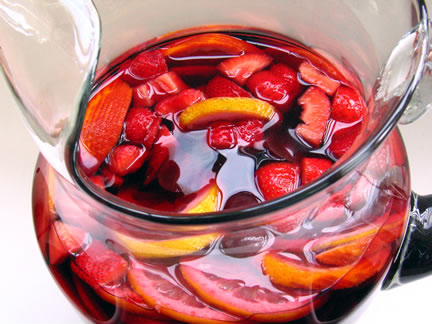
Rosé Sangria
Adapted from Bobby Flay’s Boy Gets Grill
Ingredients
1 bottle (750 ml) dry rosé, preferably Spanish or French
1 cup orange juice, preferably fresh
1/2 cup brandy
1/2 cup triple sec
1/4 cup simple syrup, or more to taste
3 cups sliced oranges, lemons, limes, apples, and blackberries or blueberries
Ice (optional)
Procedure
1. Combine the wine, orange juice, brandy, triple sec, and simple syrup in a large pitcher. Taste for sweetness, adding more simple syrup if needed. Add half of the fruit and refrigerate for at least 8 hours and up to 24 hours.
2. When ready to serve, strain out the fruit that’s been sitting in the pitcher and discard. Stir in the remaining fruit and serve the sangria straight up or over ice.
Cooking Carrots
News to me. Carrots cooked whole and then sliced up after cooking tastes better and are better for you.
Researchers at the University of Newcastle found that “boiled-before-cut” carrots contained 25 per cent more of the anti-cancer compound falcarinol than those that were chopped up first. And the sugars which give the carrot its distinctively sweet flavor were also found in higher concentrations in the carrot that had been cooked whole, so the vegetable tasted better as well as being healthier.