



Why Some Foods Are Hard To Resist
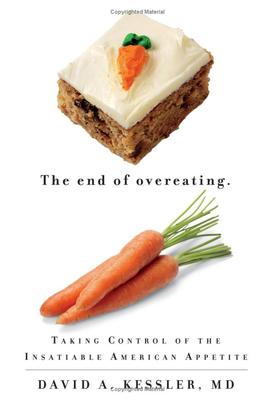
David A. Kessler,MD is a Harvard-trained doctor, lawyer, medical school dean and former commissioner of the Food and Drug Administration and to research his latest book, The End of Overeating, he turned to dumpster-diving.
He was researching the ingredients of dishes served at a neighborhood Chili’s, information he couldn’t get from the restaurant, looking for food labels on discarded boxes. As FDA Commissioner he had something to say about the nutritional labels on foods sold in retail stores, but had never required the same of restaurants. So in he went.
The labels showed the foods were bathed in salt, fat and sugars, beyond what a diner might expect by reading the menu. For example, the ingredient list for Southwestern Eggrolls mentioned salt eight different times; sugars showed up five times. The “egg rolls,” which are deep-fried in fat, contain chicken that has been chopped up like meatloaf to give it a “melt in the mouth” quality that also makes it faster to eat. By the time you finish this appetizer, you would’ve consumed 910 calories, 57 grams of fat and 1,960 milligrams of sodium.
Kessler delves into the psychology and neuroscience of our food cravings, seeking an explanation to the conundrum of the person whose “will-power” is strong on many fronts, but who finds it hard to resist unhealthy foods (I class myself among those people). He concludes that we’re extremely susceptible to reward-conditioning when the reward consists of foods that combine fat, sugar and salt, and that the food industry has evolved to deliver extremely efficient, super-sized portions of fat-sugar-salt bombs in a variety of satisfying textures and presentations. Through interviews with scientists, psychologists and food industry insiders, and his own scientific studies and hours spent surreptitiously watching other diners at food courts and restaurants around the country, Kessler writes that he finally began to understand why he himself has spent his life having a hard time controlling his eating.
“Highly palatable” foods — those containing fat, sugar and salt — stimulate the brain to release dopamine, the neurotransmitter associated with the pleasure center. In time, the brain gets wired so that dopamine pathways light up at the mere suggestion of the food, such as driving past a fast-food restaurant, and the urge to eat the food grows insistent. Once the food is eaten, the brain releases opioids, which bring emotional relief. Together, dopamine and opioids create a pathway that can activate every time a person is reminded about the particular food. This happens regardless of whether the person is hungry.
Not everyone is vulnerable to “conditioned overeating” — Kessler estimates that about 15 percent of the population is not affected and says more research is needed to understand what makes them immune. But for those like me and Kessler, the key to stopping the cycle is to rewire the brain’s response to food — not easy in a culture where unhealthy food and snacks are cheap and plentiful, portions are huge and consumers are bombarded by advertising that links these foods to fun and good times, he said. Deprivation only heightens the way the brain values the food, which is why dieting doesn’t work, he said.
He concludes with a set of recommendations for breaking the conditioned responses we develop to crappy food. But this is where the book was a little disappointing. Having set up an exciting new framework for understanding our relationship to food, all Kessler offers by way of resisting junk food is a kind of Weight Watchers: be mindful about what you eat, avoid temptation, don’t give in a little lest you give in a lot, and so on. Nothing new here, and while it works, it’s hard, and harder still to sustain. Anyone who’s devoted more than a few hours to the question of controlling weight and eating has encountered and tried this advice — and chances are, they’ve failed at it.
Nonetheless, the book barrels along as a pop-sci book that clearly explains the science behind the “Insatiable American Appetite.”

Leave a Reply