

Vitamins Found to Curb Exercise Benefits
I read about an interesting study today in the NYTimes, published in this week’s Proceedings of the National Academy of Sciences. Antioxidant vitamins like C and E may block some of the beneficial effects of exercise and dieting, including the body’s sensitivity to insulin.
As summarized in the article:
…exercise makes the muscle cells metabolize glucose, by combining its carbon atoms with oxygen and extracting the energy that is released. In the process, some highly reactive oxygen molecules escape and make chemical attacks on anything in sight…These reactive oxygen compounds are known to damage the body’s tissues. The amount of oxidative damage increases with age, and according to one theory of aging it is a major cause of the body’s decline…The body has its own defense system for combating oxidative damage, but it does not always do enough. So antioxidants, which mop up the reactive oxygen compounds, may seem like a logical solution.
The researchers at the University of Jena in Germany, tested this proposition by having young men exercise, giving half of them moderate doses of vitamins C and E and measuring sensitivity to insulin as well as indicators of the body’s natural defenses to oxidative damage.
They found that in the group taking the vitamins there was no improvement in insulin sensitivity and almost no activation of the body’s natural defense mechanism against oxidative damage.
The reason, they suggest, is that the reactive oxygen compounds, inevitable byproducts of exercise, are a natural trigger for both of these responses. The vitamins, by efficiently destroying the reactive oxygen, short-circuit the body’s natural response to exercise.
The researcher’s conclusions:
If you exercise to promote health, you shouldn’t take large amounts of antioxidants, and antioxidants in general cause certain effects that inhibit otherwise positive effects of exercise, dieting and other interventions.
It might be that reactive oxygen is beneficial in small doses, because it touches off the body’s natural defense system, but harmful in higher doses.
Piano Duet
A wonderful impromptu piano performance at the Mayo Clinic by 90-year-old Marlo Cowan and his wife of 62 years, Fran. A cheerful tribute to long life and a successful marriage.


The Anti Anti Vaccine Post
Parents are ultimately responsible for deciding what is best for their babies. Only in critical situations should a something like this statement be questioned. Yet fears about vaccine safety is threatening to become a critical, public health concern.
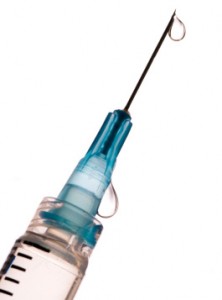
An article in the upcoming issue of Discover magazine attacks this controversy head-on.
Vaccines do not cause autism. That was the ruling in each of three critical test cases handed down on February 12 by the U.S. Court of Federal Claims in Washington, D.C. After a decade of speculation, argument, and analysis—often filled with vitriol on both sides—the court specifically denied any link between the combination of the MMR vaccine and vaccines with thimerosal (a mercury-based preservative) and the spectrum of disorders associated with autism. But these rulings, though seemingly definitive, have done little to quell the angry debate, which has severe implications for American public health.
The idea that vaccines are responsible for an epidemic of autism is everywhere–cable news shows,blogs, celebrity magazines, and on Oprah–and has a number of high-profile, if not highly scholarly, supporters (e.g., Charlie Sheen, Jenny McCarthy, and Jim Carrey).
There is a lot of passion and emotion around this issue, and with good reason. Autism is terrible, and is often devastating to families. And for reasons no one is sure of, the incidence of autism seems to be rising rapidly. In the 70′s, the statistic was something like 1 in 10,000 kids. Today, you often hear quoted a 1 in 150 statistic.
“The irony is that vaccine skepticism—not the vaccines themselves—is now looking like the true public-health threat,” writes Chris Mooney, the author of the Discover article.
This article good does a good job of reviewing the history to led to the vaccine scare in the first place, and I would encourage you to read it, along with some of the resources below. It goes further, however,to cover why this matters:
The provaccine case starts with some undeniable facts: Vaccines are, as the IOM puts it, “one of the greatest achievements of public health.” The CDC estimates that thanks to vaccines, we have reduced morbidity by 99 percent or more for smallpox, diphtheria, measles, polio, and rubella. Averaged over the course of the 20th century, these five diseases killed nearly 650,000 people annually. They now kill fewer than 100. That is not to say vaccines are perfectly safe; in rare cases they can cause serious, well-known adverse side effects. But what researchers consider unequivocally unsafe is to avoid them. As scientists at the Johns Hopkins Bloomberg School of Public Health recently found while investigating whooping cough outbreaks in and around Michigan, “geographic pockets of vaccine exemptors pose a risk to the whole community.”
The fact that the vaccination program has, over the years, been so successful is one of the reasons why antivaccination sentiments have thrived. We rarely see most of the diseases that the vaccines protect us against. It’s hard to be afraid of such an enemy that has not been around in a while, and now we’re a generation or two removed from the devastation these diseases cause.
Given enough vaccine exemptions and localized outbreaks, it is possible that largely vanquished diseases could become endemic again. (That is precisely what happened with measles in 2008 in the U.K., due to skepticism there about the MMR vaccine, where the original, faulty reports came from.) The public-health costs of such a development would be enormous—and they would not impact everyone equally. If vaccine rates start to drop as a whole, it won’t matter that an individual did or didn’t get the shots, and the people that are going to be affected the most are going to be people who live in poor, crowded conditions.
Resources:
AntiAntiVax–The Truth About the Evils of Vaccination
Viewpoints:
Why Does the Vaccine/Autism Controversy Live On
My Child Has Autism and I Vaccinate
A Life Less Ordinary: A Deadly History
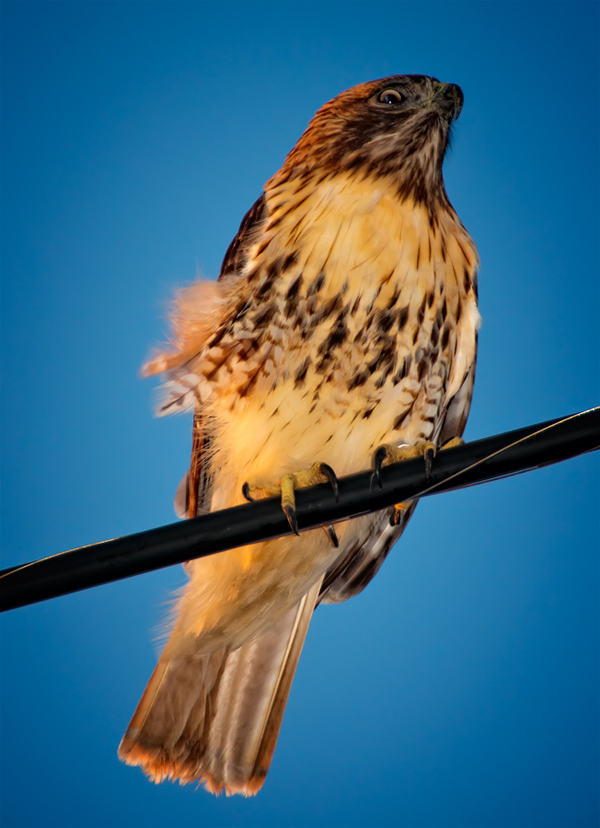


Red-bellied woodpecker

James took a picture of a Red-bellied Woodpecker (male) at the feeders on May 8.
Mother of all Keepers
This afternoon the 175′ USCG Coastal Buoy Tender Ida Lewis docked at the end of Straight Wharf, taking up all of the space soon to be filled by the mega yachts of summer. I cannot say that I know that much about these boats, but a quick Google search revealed some interesting history about the boat’s namesake.

Ida Lewis was born Idawalley Zorada Lewis in 1842. She gained national notoriety serving in the US Lighthouse Service at a time when few women were in the professional workforce. She overcame the biases of the time to become the official keeper of the Lime Rock Light Station in, during her 39-year tenure, she is credited with saving 18 lives. She was, in fact, once dubbed “the Bravest Woman in America.”
A tribute poem from the USCG website:
IDA LEWIS TO THE RESCUE
The mother is trimming her lamp above
For the day is wild and drear;
That the Lime Rock Light might greet the night
With its steady blaze of cheer.
The daughter sits at her work below
For the girl is used to toil;
Plying her oar with a willing hand,
Or feeding the lamp with oil.
The mother looks on the angry sea,
And thrills to a sight of dread
A sinking boat, with a drowning crew,
Mid billows that roll o’erhead.
She would bring them aid–but her
strength is past–
She can only weep and wail,
As with hurried step she hastens down
To tell the terrible tale.
But Ida, ready and prompt at need,
Has rescued many before;
Nor heeds the gale as o’er stone and weed
She flies to the rock-bound shore.
Her brow is bare to the beating rain;
She feels not the driving storm;
Though winds may moan and the gray gulls sail
And the wintry tide run strong.
Now quick to her boat, with practiced hand,
She launches the fragile bark
It hath brougrt ere [sic] now through swelling seas
To the sinking man an ark!
But ne’er before, when it cleft the tide
From shipwreck to seek and save,
Was her woman’s arm so sorely tried
By the strife of wind and wave.
Then Ida on- to the rescue spring!
Of the three! the boy is gone!
Though two still cling to the slippery keel,
Yet they cannot cling there long.
On Ida! on! Though the billows rage.
For the prey so nearly won!
Yet your feeble arm shall cheat their wrath,
And your work of love be done.

Time to Have “The Talk”
Here’s two of my favorite growing up stories, courtesy the previously innocent mind of our eldest son.
Back when he was in kindergarten, he came up to me one day after school and proudly announced that he knew “what the ‘f-word’ is.” I was shocked, needless to say. You could see in his face that he knew this was something special, something he shouldn’t be talking about. To prove his point, he let me know that the f-word has “four letters, right?” Curious where he would take this, I replied, “Okay,” looking around to make sure no one was listening, “tell me what it is.” He put his hand up, also looked around for innocent ears, and whispered to me, “fart.” I said, with some phony shock in voice, “Shhh! Don’t let your mother hear you say that word!” And dropped it. Quickly.
On another occasion, we had some friends over for dinner. They have a couple of slightly older boys. The boys were watching TV as we were sitting around talking after dinner. Without anyone actually paying attention, they had the TV on HBO watching a movie. As can sometimes happen on HBO, a scene in the movie showed a bouncing pair of breasts. To our embarrassment, this happened just as all of the adults were coming in to the family room. Without even a hint of blush of giddiness, our oldest son simply announced, “Hey mom, look, her ‘milk-holders’ are showing.” At this point he had seen his mother nurse one or two other children. There was nothing sexual about this, not in his young innocent mind, it was just strange to him that the actress had set them free without a hungry infant crying for them.
These stories are funny, but they also show that our children are exposed to sexual messages long before they even know what these messages mean. It has come to our attention lately that at the ripe age of 10 (almost 11), these messages are starting to take on real meaning. Girls are suddenly interesting and 5th-grade classmates are talking about who is “going out” with who.
Gulp.

It’s time.
Studies repeatedly show that when parents talk early and often about sex, children are more likely to postpone sexual activity until they are older, and also more likely to use protection once they become sexually active. And the talks, experts say, should not just be about sperm meeting egg, but also about emotions, and consequences and more. Research by the Rand Corporation released in the March issue of the journal Pediatrics last year, lists 22 different topics parents should cover, including “decisions about whether to have sex, consequences of getting pregnant or getting someone pregnant, selection of a birth control method, what it feels like to have sex and protection offered by condoms.”
It’s a hard conversation to have. Hard to know how much focus to give to the science of it, how much of the talk should be about pregnancy and STDs and the scary parts, and how much to focus on the emotions and morality involved. And how do you bring it up?
Planned Parenthood’s site has some helpful tips, including a list of age appropriate conversation starters. A few examples:
YOUNG CHILDREN
- Do you know the names of all your body parts?
- Do you know why girls look different than boys?Your aunt is pregnant. Do you know what that means?
PRETEENS
- People change a lot during puberty. What have you heard about the changes of puberty? How do you feel about going through puberty?
- At what age do you think a person should start dating? Have any of your friends started dating?
- Do you think girls and boys are treated differently? (If yes …) How?
TEENS
- How have you changed in the last two years? What do you like and what do you not like about the changes?
- At what age do you think a person is ready to have sex? How should a person decide?
- At what age do you think a person is ready to be a parent?
And if you don’t feel comfortable just bringing up the subject out of the blue, there are conversation triggers everywhere. Just watch a movie rated PG or above, and there will likely be a moment or two that can serve as a segue. Or better yet, flip through a magazine and let the advertising industry help you out.

In short, we want our kids to live healthy and rewarding lives. Sex is an important part of a healthy and rewarding life. And no place is a more meaningful place to learn about life than home.
Here are some resources to guide your efforts:
Websites
Parents, Family and Friends of Lesbians and Gays
There’s No Place Like Home … for Sex Education
Books
How to Talk with Teens About Love, Relationships, and S-E-X by Amy G. Miron and Charles D. Miron
Sex & Sensibility: The Thinking Parent’s Guide to Talking Sense About Sex by Deborah M. Roffman
Sexuality: Your Sons and Daughters With Intellectual Disabilities by Karin Melberg Schwier and David Hingsburger
Staying Connected to Your Teenager: How to Keep Them Talking to You and How to Hear What They’re Really Saying by Michael Riera
Teaching Children with Down Syndrome about Their Bodies, Boundaries, and Sexuality by Terri Couwenhoven
Why Do They Act That Way?: A Survival Guide to the Adolescent Brain for You and Your Teen by David Walsh
Books written for children
It’s Not the Stork!: A Book About Girls, Boys, Babies, Bodies, Families and Friends by Robie Harris (for ages 4 and up)
It’s Perfectly Normal: Changing Bodies, Growing up, Sex, and Sexual Health by Robie Harris (for ages 10 and up)
It’s So Amazing!: A Book about Eggs, Sperm, Birth, Babies, and Families by Robie Harris (for ages 7 and up)
What’s the Big Secret?: Talking about Sex with Girls and Boys by Laurie Krasny Brown and Marc Brown (for ages 4-8)
The “What’s Happening to My Body?” Book for Boys: A Growing Up Guide for Parents and Sons by Lynda Madaras and Martin Anderson (for ages 8 to 15)
The “What’s Happening to My Body?” Book for Girls: A Growing Up Guide for Parents and Daughters by Lynda Madaras and Marcia Herman-Giddens (for ages 8 to 15)