

An Open Letter to Oprah
Small-time blogger Shirley Wu has written a perfect letter to Oprah, and I really hope that Ms. Winfrey will see it. Here’s an excerpt:
To me, it is clear that a significant number of people look up to you, and trust your advice and judgment. That is why it is such a huge mistake for you to endorse Jenny McCarthy with her own show on your network.
Surely you must realize that McCarthy is neither a medical professional nor a scientist. And yet she acts as a spokesperson for the anti-vaccination movement, a movement that directly impacts people’s health. Claims that vaccines are unsafe and cause autism have been refuted time after time, but their allure persists in part because of high-profile champions for ignorance like McCarthy.
The letter is clear, factual, calm, and hits the right notes perfectly.
Like it or not, Oprah has a huge influence. I suspect the letter above is not even enough; she needs to actively denounce what McCarthy is saying. Still, we take what we can. Oprah now has a chance to lay down a path to either promote thousands of children getting sick and even dying, or to perhaps save those same lives.
The Study Ball
I found a new object to buy oinline, something that would be an investment in my kid’s future.

The Study Ball gadget is a prison-style ball and chain that you can program to keep track of how much time you spend studying. Once you’ve selected the desired duration, you chain the ball to your ankle and the manacle won’t come off until the schedule study time is up.
Pierce Street Vegetarian Chili
One of my favorite food blogs is Heidi Swanson’s 101 Cookbooks. She recently posted a recipe for a vegetarian chili that she was very enthusiastic about, that she called Pierce Street Vegetarian Chili. Here’s my take on it.

Ingredients:
2 tablespoons olive oil
1 large yellow onion, chopped
2 shallots, chopped
8 small/med garlic cloves, finely chopped
1 tablespoon ginger, peeled and grated
3 tablespoons chili powder
1 teaspoon ground cumin
1 serrano pepper, seeded and finely chopped
1 chipotle pepper (from can or rehydrate), minced
1 28-ounce can of crushed tomatoes
10 cups vegetable broth
1 1/2 cups cooked chickpeas (canned is fine)
2 1/4 cups black, brown, and/or green lentils, rinsed and picked over
2/3 cup pearled barley or pearled farro
2/3 cup bulgur wheat
1 teaspoon fine grain sea salt (or to taste)

Instructions:
In a large stockpot pot over medium heat add the olive oil, onion, and shallots. When the onions soften up and get a bit translucent, add the garlic, ginger, chili powder and cumin. Stir well and cook for a minute of so, until everything gets quite fragrant. Stir in the serrano pepper and chipotle pepper, tomatoes, and 8 cups of the broth. Now add the chickpeas, lentils, barley/farro, and bulgur – stirring between each addition. Bring to a boil, then reduce the heat to low and simmer. Take a taste of the broth a few minutes into the simmer – you can make adjustments for salt here – if you’re using water in place of broth, you can add a teaspoon of salt for starters and add more later if needed. Simmer away for about 35- 45 minutes or until the lentils and grains are cooked through. You will likely need to add the rest of the water, a cup at a time, if the chili thickens up too much. Before serving do your final adjustments – add more chipotle, salt, or whatever you think it needs and enjoy!
This makes a huge pot of chili. Would serve 12 (at least).

Notes:
We topped it with some crumbled queso fresco and a drizzle of olive oil, but you could top it any number of ways. Some fresh cilantro, feta cheese or goat cheese. Chopped onions. Maybe a little dollop of greek yogurt.
This is good. And, for chili, quick and easy. It has just the right amount of heat. I imagine this will be even better tomorrow. When I make this again, it will fun to vary it a little. Might be nice to add some finely grated carrots. Maybe substitute black beans for the chickpeas. I liked the idea of the ginger, thinking it would be a nice twist on the flavor of chili, but the truth is, I didn’t really taste it. Next time, I will either increase the amount a bit, or just leave it out. I imagine there are several ways to use this as a leftover. I look forward to putting some in a oven-safe bowl, making an indention on the top, cracking an egg in it, and then baking it until the egg is set. Would also be good used as in a burrito.
Nutritional data:

Creepy Baby Videos and Our Tax Dollars
Trying its hand at viral marketing, the Social Security Administration has made a video to announce this year’s most popular baby names, featuring an infant Elvis impersonator with bad fake arms, and a plug for Medicare Prescription Drug benefits. Click here and cringe.


Amazing Photo of the Sun

At first glance, not too big a deal, right? Until you notice the spots in the bottom, left quadrant. Those are not sunspots. Look closer:

That’s the Space Shuttle Atlantis AND the Hubble Telescope seen in silhouette, as captured by the exceptionally gifted astrophotographer Thierry Legault just minutes before the crew of Atlantis caught up with and captured Hubble for its very last servicing mission on May 13, 2009.
Check out this other Shuttle+Sun image he took, posted by NASA on Flickr.
Spongebob Squarepants turns ten years old

The June, 2009 Atlantic issue has a story about Spongebob Squarepants, the cartoon, which turns 10 years old this Spring. Doesn’t that make you feel old? The little fry cook from Bikini Bottom has been with us longer than the iPod. It’s an interesting read though. From the article:
SpongeBob is one of the greatest believers in the American dream in all of children’s entertainment…He’s courageous, he’s optimistic, he’s representing everything that Mickey Mouse should have represented but never did. There’s even something Jesus-like about him—a 9-year-old Jesus after 15 packets of Junior Mints.
A strange trend in last letters of boy’s names
100 years ago, there were about 10 last letters that dominated; 50 years ago, the number of popular last letters declined slightly, to about 6; but now, a single letter stands out: an amazing 36% of baby boys in America have names ending in N. Look at these graphs to see how incredibly strange this looks.
Some Things Don’t Make Sense…Yet
I recently read a fascinating post on the NewScientist website called “13 things that do not make sense.” Here are some of this highlights:
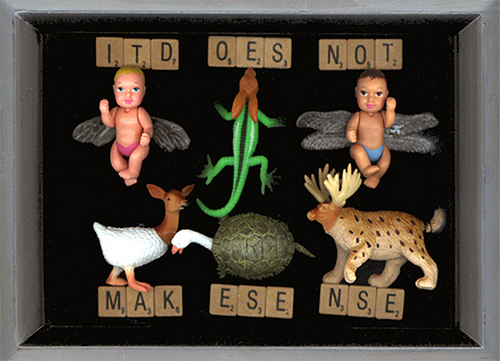
The placebo effect–
Don’t try this at home. Several times a day, for several days, you induce pain in someone. You control the pain with morphine until the final day of the experiment, when you replace the morphine with saline solution. Guess what? The saline takes the pain away…We have a lot to learn about what is happening here,…but one thing is clear: the mind can affect the body’s biochemistry. “The relationship between expectation and therapeutic outcome is a wonderful model to understand mind-body interaction.” Researchers now need to identify when and where placebo works.

The horizon problem–
Our universe appears to be unfathomably uniform. Look across space from one edge of the visible universe to the other, and you’ll see that the microwave background radiation filling the cosmos is at the same temperature everywhere. That may not seem surprising until you consider that the two edges are nearly 28 billion light years apart and our universe is only 14 billion years old. Nothing can travel faster than the speed of light, so there is no way heat radiation could have travelled between the two horizons to even out the hot and cold spots created in the big bang and leave the thermal equilibrium we see now.

Belfast homeopathy results–
Madeleine Ennis, a pharmacologist at Queen’s University, Belfast, was the scourge of homeopathy. She railed against its claims that a chemical remedy could be diluted to the point where a sample was unlikely to contain a single molecule of anything but water, and yet still have a healing effect. Until, that is, she set out to prove once and for all that homeopathy was bunkum.
In her most recent paper, Ennis describes how her team looked at the effects of ultra-dilute solutions of histamine on human white blood cells involved in inflammation. These “basophils” release histamine when the cells are under attack. Once released, the histamine stops them releasing any more. The study, replicated in four different labs, found that homeopathic solutions – so dilute that they probably didn’t contain a single histamine molecule – worked just like histamine. Ennis might not be happy with the homeopaths’ claims, but she admits that an effect cannot be ruled out.
So how could it happen? Homeopaths prepare their remedies by dissolving things like charcoal, deadly nightshade or spider venom in ethanol, and then diluting this “mother tincture” in water again and again. No matter what the level of dilution, homeopaths claim, the original remedy leaves some kind of imprint on the water molecules. Thus, however dilute the solution becomes, it is still imbued with the properties of the remedy. You can understand why Ennis remains sceptical. And it remains true that no homeopathic remedy has ever been shown to work in a large randomised placebo-controlled clinical trial. But the Belfast study (Inflammation Research, vol 53, p 181) suggests that something is going on. “We are,” Ennis says in her paper, “unable to explain our findings and are reporting them to encourage others to investigate this phenomenon.” If the results turn out to be real, she says, the implications are profound: we may have to rewrite physics and chemistry.