



Kodak, Instagram and Healthcare
Dr. Rob Lamberts is a new friend of mine. (I’ve never actually met him, but with Facebook and Twitter and the like, you no longer to know someone to know someone, right?)
He is a Med-Peds physician in Augusta, GA, who is also rebounding from burn out (my diagnosis, not his).
Looking through his blog, I found an entry from last fall that, I think, speaks a lot of truth about the impending implosion of our health care system. At a time when costs are escalating, and quality is falling, and more and more people are going to make use of the health care system given the well-meaning, but ultimately misguided policies of the Affordable Care Act (I’ll go in to that more at a later date), something has to change. This industry has to evolve, or it risks becoming the Kodak of the first part of this century.
Kodak was, at one point, the consummate American success story, dominating its market like few others. In 1976, it had a 90% market share of film, as well as 80% of cameras sold in the US. Kodak Park, the property at the center of manufacturing once employed 29,000 employees, with its own fire company, rail system, water treatment plant, and continuously staffed medical facility.
Fast-forward to 2012, and the picture changes dramatically. In a single year, Kodak declared chapter 11 bankruptcy, received a warning from the New York Stock Exchange that its stock was below $1/share for long enough that it was at risk of being delisted, announced it is no longer making digital cameras so as to focus on its core business: printing, and then a few weeks ago announced it was no longer making inkjet printers. The job force in Rochester alone has gone down by nearly 90%, to an estimated 7200 employees.
Adding pain for former Kodak fans was the announcement in April of this year that Facebook was buying the photo sharing company Instagram (which employed 13 people at the time) for an estimated $1 Billion.
I remember reading that at the time of their bankruptcy hearings, a judge placed a value of $525 million on the assets (primarily patents) of the company. And here the app, whose sole purpose is to take a photo that pales in comparison with the quality of a photo taken on kodak film, then to apply a filter to it, making it look like a photo taken on old, outdated film, was purchased for almost twice that amount!
…the success of Instagram at the expense of the wonderful folks up in Rochester happened because Kodak had too much at stake to embrace a disruptive technology that spelled doom to its business model. Even if Kodak had embraced digital technology, wouldn’t they have still had to lay off tens of thousands of people in the process? Wouldn’t they have had to stop making film, printing paper, and doing all of those tasks on which they had built a 90% market share? The Kodak of my childhood, the one that paid for my college education, gave a canvas for Hollywood’s imagination, and inspired Paul Simon to write one of my favorite songs, that Kodak had to disappear because something better came along.
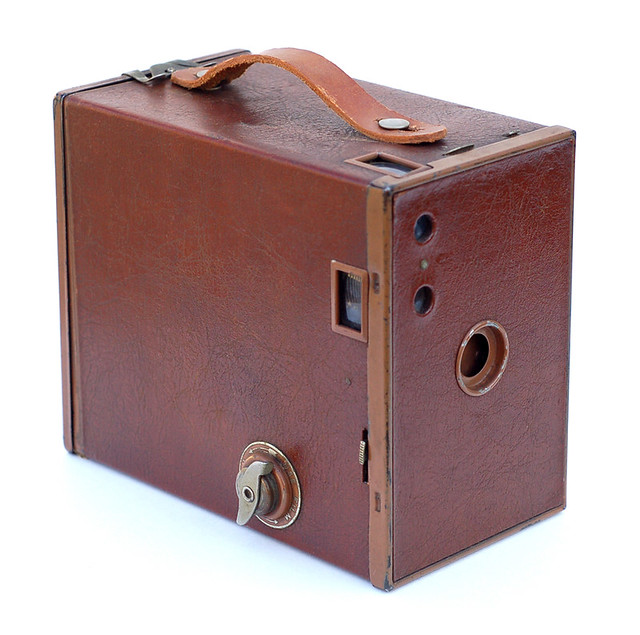
It used to be that photography was a mysterious process to most consumers. They bought film from Kodak without understanding how it worked. Kodak succeeded by making the process easy enough for the average person to do. People used the camera without knowing how their pictures would turn out, sent the film off to get it magically transformed into photographs that they could show others. Ironically, the company that literally made black boxes made billions by keeping the process a black box for most people. Then came digital photography, cameras on phones, and eventually social media. Now there was no need for film, no need for cameras, no place to send the photos to get developed, and even no need to be on the same continent to share pictures with people. Technology eviscerated Kodak’s business model by removing the black box. It wasn’t just digital cameras that doomed Kodak, making it easy to carry cameras everywhere and to share with people instantly was also needed…
Dr. Rob proceeds to apply this lesson to the idea of health care reform:
Health care has previously been a black box to most consumers – a mysterious process by which the high priests (doctors) would perform healing through the use of their special knowledge and the wondrous healing of medications. But unlike Kodak, health care was able to keep raising prices instead of becoming more efficient. Now the health care industry has an economy larger than nearly all countries on this planet. The number of people employed by this economy is staggering, and the number of businesses built off of this model of inefficiency is huge. Imagine the damage an “Instagram of health care” could cause.
That is why I no longer feel that the solution to our problem will come from within the system: the system itself must be eviscerated for it to survive, and most systems (like Kodak) don’t see evisceration as a good business strategy. Legislators may pretend to pursue meaningful reform, but far too many of their constituents stand to lose their jobs if they succeeded, and far too much of their campaign funds come from companies built on the old economy of waste. Having hospitals oversee ACO’s [Accountable Care Organizations] is like putting Kodak executives in charge of laws concerning digital image sharing.
So what would the “Instagram of health care” look like? I think it would:
- Rely on technology to simplify things greatly.
- Use social technology to cut out black boxes.
- Put the control of care in the hands of the people who use it.
In a tiny, little way, this is what my informal Facebook Focus Group experiment is pointing me towards. Why not try to step out of the system (before it is eviscerated anyway) and at least try to do things in a new way.
(photo: Kodak No. 2A Brownie (Model C) by flickr user John Kratz)

January 17th, 2013 at 5:49 pm
The three points are too vague for me to understand how they would revolutionize medicine. I am not sure that those interests that exist because of inefficiency could stop reform. Maybe so (I don’t understand all the details.) I don’t see the analogy. I don’t see not going to a doctor or hospital, so what is the alternative technology that will replace the current system? (OK, I understand medical records. Good job, Greg.)
January 17th, 2013 at 6:11 pm
This makes sense! No more high priests of medicine. I have a health problem, say, high blood pressure, I take my OWN pressure 3x a day for a month and call my doctor with the results. He recommends dropping 15 pounds to see if that’ll do it. It does. Yay! Teamwork, I’m responsible for my health. Or if it doesn’t back to doc, Hmmm, BP meds. try this…I take my pressure 3x a day again and email the results. Heck, the first time I could have emailed results. Chronic conditions can be followed by technology. When I was an EMT many calls could have been handled at home. I wonder if it’s the same with doctor appointments?
January 18th, 2013 at 1:29 am
Bob, the three points (written by a doctor for an audience of readers interested in health care reform) isn’t saying that the doctor-patient relationship should be changed. In fact, it is saying that things like improved access, allowing or even encouraging communication in between the rare, dreaded and hard-to-get office visit. Disease management, with the patient as partner, instead of as subject, that continues on even after a visit. Using social media like technologies to accomplish this. And, in general, giving the patients more control, by giving them access to and even control over their records, and motivating them to be participants.