

Spongebob Squarepants turns ten years old

The June, 2009 Atlantic issue has a story about Spongebob Squarepants, the cartoon, which turns 10 years old this Spring. Doesn’t that make you feel old? The little fry cook from Bikini Bottom has been with us longer than the iPod. It’s an interesting read though. From the article:
SpongeBob is one of the greatest believers in the American dream in all of children’s entertainment…He’s courageous, he’s optimistic, he’s representing everything that Mickey Mouse should have represented but never did. There’s even something Jesus-like about him—a 9-year-old Jesus after 15 packets of Junior Mints.
Some Things Don’t Make Sense…Yet
I recently read a fascinating post on the NewScientist website called “13 things that do not make sense.” Here are some of this highlights:
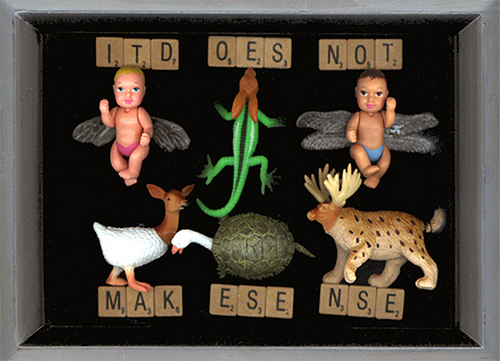
The placebo effect–
Don’t try this at home. Several times a day, for several days, you induce pain in someone. You control the pain with morphine until the final day of the experiment, when you replace the morphine with saline solution. Guess what? The saline takes the pain away…We have a lot to learn about what is happening here,…but one thing is clear: the mind can affect the body’s biochemistry. “The relationship between expectation and therapeutic outcome is a wonderful model to understand mind-body interaction.” Researchers now need to identify when and where placebo works.

The horizon problem–
Our universe appears to be unfathomably uniform. Look across space from one edge of the visible universe to the other, and you’ll see that the microwave background radiation filling the cosmos is at the same temperature everywhere. That may not seem surprising until you consider that the two edges are nearly 28 billion light years apart and our universe is only 14 billion years old. Nothing can travel faster than the speed of light, so there is no way heat radiation could have travelled between the two horizons to even out the hot and cold spots created in the big bang and leave the thermal equilibrium we see now.

Belfast homeopathy results–
Madeleine Ennis, a pharmacologist at Queen’s University, Belfast, was the scourge of homeopathy. She railed against its claims that a chemical remedy could be diluted to the point where a sample was unlikely to contain a single molecule of anything but water, and yet still have a healing effect. Until, that is, she set out to prove once and for all that homeopathy was bunkum.
In her most recent paper, Ennis describes how her team looked at the effects of ultra-dilute solutions of histamine on human white blood cells involved in inflammation. These “basophils” release histamine when the cells are under attack. Once released, the histamine stops them releasing any more. The study, replicated in four different labs, found that homeopathic solutions – so dilute that they probably didn’t contain a single histamine molecule – worked just like histamine. Ennis might not be happy with the homeopaths’ claims, but she admits that an effect cannot be ruled out.
So how could it happen? Homeopaths prepare their remedies by dissolving things like charcoal, deadly nightshade or spider venom in ethanol, and then diluting this “mother tincture” in water again and again. No matter what the level of dilution, homeopaths claim, the original remedy leaves some kind of imprint on the water molecules. Thus, however dilute the solution becomes, it is still imbued with the properties of the remedy. You can understand why Ennis remains sceptical. And it remains true that no homeopathic remedy has ever been shown to work in a large randomised placebo-controlled clinical trial. But the Belfast study (Inflammation Research, vol 53, p 181) suggests that something is going on. “We are,” Ennis says in her paper, “unable to explain our findings and are reporting them to encourage others to investigate this phenomenon.” If the results turn out to be real, she says, the implications are profound: we may have to rewrite physics and chemistry.
Piano Duet
A wonderful impromptu piano performance at the Mayo Clinic by 90-year-old Marlo Cowan and his wife of 62 years, Fran. A cheerful tribute to long life and a successful marriage.

Hospital Food
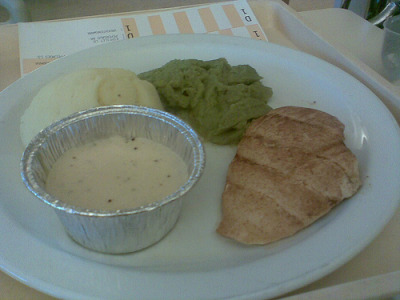
Here’s a link to Hospital Food, a new blog that collects pictures of healthy, healing meals from hospitals from around the world.
RIP ackdoc.com

Today I took down the old ackdoc.com website. It first went live October, 2001. I had a lot of fun with that website. Posted hundreds of new baby pictures. Got thousands of hits. As of today, it has been replaced by this site. I’m going to miss it.
In celebration, here’s a couple of links, remembering the good ol’ days:
The lost art of communication…
I recently wrote a long email to an old friend. We were college roommates, the best of friends, but time (and grownup obligations, and families, and professions, and geography) has gotten in the way, and now months will pass sometimes without us talking. After college, while we were both off pursuing professional degrees, we wrote letters to each other. Funny letters. Silly letters. Letters of substance. I looked forward to these letters, and think I still have most of them saved in a box in the basement.
I miss this. Not just his letters. But letter-writing. Modern technology has not only changed how we communicate, it has weakened our ability to do so. His reply to my recent email said it well:
People don’t…write, or for that matter, even articulate anything well. It’s all about infotransfer—just a sterile efficient passage of the most pedestrian thoughts. I really hate what texting [twittering], etc. is doing to our language and our appreciation for a phrase aptly rendered. Its not just the goofy abbreviations and the super-slangification; I’m most frustrated by how it speeds everything up and pares it down. No one really takes the time or care to say anything well. [My teen son] has taken to saying “brb” (pronounced: “burb”) as in “be right back” when he leaves the room for a second. I told him I have to draw the line when you actually start pronouncing the abbreviations! I bet people’s “working” vocabulary if they were born after 1995 is going to be about a tenth of that of people our age simply because they can’t afford to have too many words for any idea— its like they have small carry-on brains and have to pack as lightly as possible– as few words as possible and preferably short ones. Nuances are an unaffordable luxury and have to go. All that stuff about Eskimos having 100 words for snow is over. I bet modern inuits simply have “sno”.
I used to think that it was a real shame that people had insufficient words to express the profundity or beauty of their thoughts, but now I have a new theory—most people have no profound or beautiful thoughts and so are equipped quite adequately. A bigger shame really. Actually, my real theory revolves around the notion that our vocabulary represents more than the tools by which we articulate our thoughts. I think words are actually the building blocks from which we assemble our thoughts in the first place. If you have no word or symbol or some kind of construct to represent an idea, it seems reasonable that you will have difficulty managing and manipulating that idea in your thoughts and imagination. Therefore, an impoverished vocabulary equals mediocre musings. I tell my grad classes that I will be hard on their written and spoken communication, and that they should take care with their words. I tell them 1) I am convinced that they don’t really know anything until they can articulate it clearly (too many of them think that being familiar with something or recognizing some pertinent ideas when they are presented to you is the same as actually knowing it yourself) and 2) I am not principally concerned with the fact that they are not able to speak well, I am concerned with the fact that they are not able to think well. Being a professor is great because you can climb up on any silly soapbox you own and the entire class at least pretends that they care.
In 2006, the Radicati Group estimated that, worldwide, 183 billion emails were sent per day. Two million each second. By November of 2007, an estimated 3.3 billion Earthlings owned cell phones, and 80% of the world’s population had access to cell phone coverage. In 2004, half a trillion text messages were sent, and the number has no doubt increased exponentially since then. So where amongst this gorge of gabble is there room for the elegant, polite hand-written letter?
I can’t find precise statistics to back this up, but it would seem to me that the hand-written letter is practically extinct. To sit down and write a letter by hand, you have to slow your mind and get into a more contemplative state to precisely chose words to convey nuances of emotion that could never be captured in a quick “Wassup?” And yet nothing expresses respect for another like a letter. No love email, text message or twitter status will ever be carefully bundled into a memory box and savored for years to come.

Further, instinct tells me that there may be something more important going on here. Something causing a quick (if tiny in the whole anthropologic history of things) shift in our evolution, or at least an outbreak of modern mental illnesses like OCD, bipolar disorder, and ADHD.
A recent study found that women who used a cell phone two to three times a day while pregnant had children that were 54 percent more likely to develop ADHD and other behavioral problems. And, if those children used cell phones before age 7, they were 18 percent more likely to develop ADHD.
The authors of the study deny any known causal link, and numerous studies have shown cell phones to be safe. I wonder if these findings have nothing to do with the non-ionizing radio frequency (RF) energy emitted by the devices, and instead if they might be more related to the general lifestyle that involves cell phone use and the modern-day multi-tasking the phones allow. It seems plausible to me that people who have the means and desire to use cell phones regularly are much more likely to heavily use many other forms of modern communication technology like the various social media services and text-messaging. Maybe ADHD is related to growing up in our fast-paced information-saturated, multi-tasking environment.
I want to look into this further. I’m sure there has been more research done regarding this subject. But maybe, just maybe, you can avoid a lifelong Ritalin prescription if you put the cell phone away, turn off the computer, and get out some stationery, a fountain pen, and invest in a monogrammed wax seal. A recent post on the Art of Manliness blog about the lost art of letter writing might be of some help.
A true inspiration

From CBS Evening News, here’s the story of Andy Mackie. After his ninth heart surgery, his doctors had him on 15 different medicines. But the side effects made life miserable. So one day he quit taking all 15 and decided to spend his final days doing something he always wanted to do. He used the money he would have spent on the prescriptions to give away 300 harmonicas, with lessons included. “I really thought it was the last thing I could ever do,” he says.
How much sugar is in that?
Here’s an interesting website I found today that shows in photos just how much sugar is in popular food items.

- www.sugarstacks.com
Gaiman’s “Blueberry Girl”
Neil Gaiman and Charles Vess’s Blueberry Girl is a beautiful, affirming, inspiring picture book based on a poem that Gaiman wrote for Tash, Tori Amos’s daughter (who is also Gaiman’s god-daughter). The poem is a set of benedictions for girls, wishes for a realistically joyful life where what pain that comes only serves to make the pleasure sweeter. Vess (a well-known fantasy artist) has a distinctive style that gives the book much of its charm.
…Dull days at forty, false friends at fifteen;
Let her have brave days and truth.
Let her go places that we’ve never been;
Trust and delight in her youth.
Ladies of Grace, and Ladies of Favour,
And Ladies of Merciful Night,
This is a prayer for a Blueberry Girl,
Grant her your Clearness of Sight.
Words can be worrisome, people complex;
Motives and manners unclear.
Grant her the wisdom to choose her path right,
Free from unkindness and fear.
Let her tell stories, and dance in the rain,
Somersaults, tumble and run;
Her joys must be high as her sorrows are deep,
Let her grow like a weed in the sun…