



Some Things Don’t Make Sense…Yet
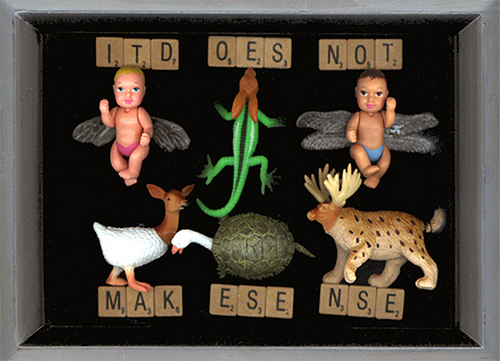
I recently read a fascinating post on the NewScientist website called “13 things that do not make sense.” Here are some of this highlights:
The placebo effect–
Don’t try this at home. Several times a day, for several days, you induce pain in someone. You control the pain with morphine until the final day of the experiment, when you replace the morphine with saline solution. Guess what? The saline takes the pain away…We have a lot to learn about what is happening here,…but one thing is clear: the mind can affect the body’s biochemistry. “The relationship between expectation and therapeutic outcome is a wonderful model to understand mind-body interaction.” Researchers now need to identify when and where placebo works.

The horizon problem–
Our universe appears to be unfathomably uniform. Look across space from one edge of the visible universe to the other, and you’ll see that the microwave background radiation filling the cosmos is at the same temperature everywhere. That may not seem surprising until you consider that the two edges are nearly 28 billion light years apart and our universe is only 14 billion years old. Nothing can travel faster than the speed of light, so there is no way heat radiation could have travelled between the two horizons to even out the hot and cold spots created in the big bang and leave the thermal equilibrium we see now.

Belfast homeopathy results–
Madeleine Ennis, a pharmacologist at Queen’s University, Belfast, was the scourge of homeopathy. She railed against its claims that a chemical remedy could be diluted to the point where a sample was unlikely to contain a single molecule of anything but water, and yet still have a healing effect. Until, that is, she set out to prove once and for all that homeopathy was bunkum.
In her most recent paper, Ennis describes how her team looked at the effects of ultra-dilute solutions of histamine on human white blood cells involved in inflammation. These “basophils” release histamine when the cells are under attack. Once released, the histamine stops them releasing any more. The study, replicated in four different labs, found that homeopathic solutions – so dilute that they probably didn’t contain a single histamine molecule – worked just like histamine. Ennis might not be happy with the homeopaths’ claims, but she admits that an effect cannot be ruled out.
So how could it happen? Homeopaths prepare their remedies by dissolving things like charcoal, deadly nightshade or spider venom in ethanol, and then diluting this “mother tincture” in water again and again. No matter what the level of dilution, homeopaths claim, the original remedy leaves some kind of imprint on the water molecules. Thus, however dilute the solution becomes, it is still imbued with the properties of the remedy. You can understand why Ennis remains sceptical. And it remains true that no homeopathic remedy has ever been shown to work in a large randomised placebo-controlled clinical trial. But the Belfast study (Inflammation Research, vol 53, p 181) suggests that something is going on. “We are,” Ennis says in her paper, “unable to explain our findings and are reporting them to encourage others to investigate this phenomenon.” If the results turn out to be real, she says, the implications are profound: we may have to rewrite physics and chemistry.

Leave a Reply